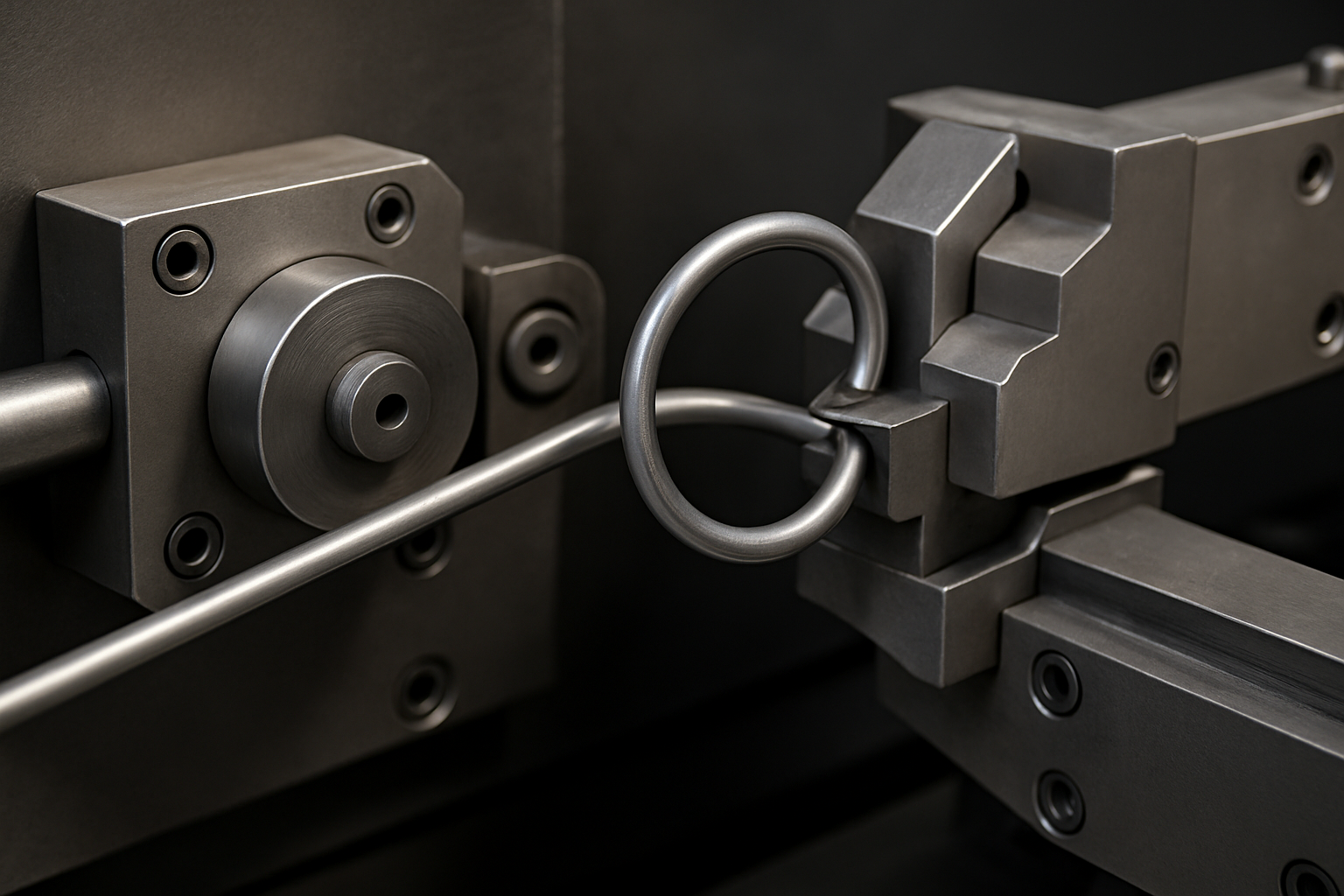
CNC Wire Bending: Transforming Manufacturing Precision Worldwide
In today's advanced manufacturing landscape, precision is no longer a luxury—it's a requirement. One technology that embodies this precision is CNC wire bending. From automotive frames to intricate medical components, wire bending machines have quietly become the backbone of industries demanding accuracy, efficiency, and scalability.
Whether you're a product engineer, supply chain manager, or business owner exploring automation solutions, understanding the full potential of CNC wire bending is crucial for staying competitive in global markets.
What is CNC Wire Bending?
CNC (Computer Numerical Control) wire bending refers to the process of shaping metal wires using programmable, automated machinery. These machines receive digital instructions to form metal wire into precise shapes and angles without human interference.
How CNC Wire Bending Works
The process begins with a metal wire spool that feeds into a CNC machine. Based on uploaded CAD designs, the system manipulates the wire using rollers, benders, and cutters. The result? Flawlessly curved or angled wire components with high repeatability and zero deviation.
Difference Between 2D and 3D Wire Bending
-
2D Wire Bending: Shapes wire along the X and Y axes—ideal for flat designs such as hooks and brackets.
-
3D Wire Bending: Adds the Z-axis into the equation, allowing for complex spatial designs used in automotive or medical tools.
Why CNC Wire Bending is Revolutionizing Production Lines
-
Enhanced Accuracy: Machines operate within millimeters of precision, ensuring that every wire part is consistent across production runs.
Cost Efficiency: Less manual labor, reduced material waste, and faster turnaround times.
-
Complex Geometry Capabilities: Enables the creation of shapes that would be impossible with traditional bending tools.
Key Types of CNC Wire Bending Machines
2D CNC Wire Bending Machines
Ideal for mass-producing parts such as seat brackets, tool hangers, or display racks. These machines are often faster and simpler to operate.
3D CNC Wire Bending Machines
More advanced and used for creating frames, coils, and wire structures for demanding sectors like aerospace or robotics.

Industries That Rely on CNC Wire Bending
-
Automotive: For seat frames, spring mechanisms, and safety restraints.
-
Aerospace: Lightweight wire assemblies that meet strict tolerances.
-
Medical Devices: Intricate shapes for surgical instruments or device frames.
-
Furniture: Wire grids, shelves, and aesthetic frames.
CNC Wire Bending Services: When to Outsource?
While some companies prefer in-house wire bending, outsourcing is often more efficient for:
-
Prototype development
-
Short-run orders
-
Complex multi-axis parts
Choosing the Right Vendor
When selecting a CNC wire bending service provider like Güneş Tel, consider:
-
Years of industry experience
-
Range of materials supported
-
Customization and design support
Integration of CNC Bending with Automation and Robotics
Today’s CNC machines often operate within fully automated cells. Robots feed the wire, sensors monitor the quality, and AI optimizes production.
This results in:
-
Faster cycles
-
Fewer errors
-
Reduced labor costs
Custom Wire Forms & Prototyping
One of the standout features of CNC wire bending is its flexibility in customization. Whether you're working on a prototype for a new consumer product or need unique forms for industrial assembly, CNC bending can deliver with precision.
Small Batch Wire Bending
Unlike traditional manufacturing methods that require large volume orders to be cost-effective, CNC wire bending is scalable. Small batch runs are economically viable thanks to fast setup times and minimal material waste.
Wire Forming for R&D Projects
Research and development often involve trial-and-error. CNC bending machines allow quick iterations of design, helping engineers test various shapes, diameters, and angles without significant downtime or cost.
Material Compatibility in CNC Wire Bending
Choosing the right material is just as important as the bending technique. CNC machines can handle a wide array of metals, each offering unique mechanical benefits.
Common Metals Used
-
Mild Steel: Cost-effective and easily formable.
-
Stainless Steel: Corrosion-resistant and ideal for outdoor or medical use.
-
Aluminum: Lightweight and non-magnetic.
-
Copper and Brass: Used for electrical or decorative applications.
Strength vs Flexibility Trade-offs
Different applications call for different wire properties. For instance, spring-loaded components require flexible materials, whereas structural frames demand high tensile strength.
CNC Wire Bending vs Traditional Bending Techniques
Let’s compare CNC wire bending with manual or hydraulic methods:
| Feature | CNC Wire Bending | Traditional Bending |
|---|---|---|
| Precision | ±0.1 mm | ±1-2 mm |
| Setup Time | Minimal (software-based) | High (manual jigs/dies) |
| Labor Requirement | Low | High |
| Material Waste | Minimal | Moderate to High |
| Complexity of Shapes | Simple to Complex | Limited |
Top Benefits of Using 3D CNC Wire Bending Machines
3D wire bending opens doors to previously impossible designs. Here’s why manufacturers love them:
-
Multi-Axis Precision: Enables intricate spatial designs in a single production step.
-
Reduced Assembly Steps: Parts that used to be assembled from multiple components can now be bent into shape from a single wire.
-
Innovative Design Capabilities: Useful for modern products demanding both functionality and visual appeal.
Common Applications of CNC Wire Bending
CNC wire bending isn't just for heavy industry. You’ll find wire-formed parts in:
-
Brackets and Clamps: Used in electrical and mechanical assemblies.
-
Springs and Retainers: For suspension systems and fixtures.
-
Grids and Wireframes: Found in household appliances, furniture, and shelving.
Factors to Consider When Choosing a CNC Bending Partner
Choosing the right vendor can make or break your production success.
Experience & Certification
Seek a company with ISO certifications and a solid portfolio across industries.
Machinery Capabilities
Ensure they offer both 2D and 3D CNC bending, as well as automated cutting and coiling if needed.
Global Reach
International shipping, multilingual support, and export compliance are vital for cross-border projects.
Environmental Impact and Sustainability of CNC Bending
Modern CNC wire bending contributes to greener production methods.
-
Energy Efficiency: Machines are optimized for minimal power usage.
-
Material Waste Reduction: Accurate cuts and bends mean fewer off-cuts.
-
Recyclability: Metal wire scraps are easy to recycle.
CNC Wire Bending for Mass Production vs Custom Orders
Whether you're producing 100 or 10,000 units, CNC wire bending adapts easily.
-
Mass Production: Ideal for automotive and industrial manufacturing lines.
-
Custom Orders: Supports innovation with affordable short runs and fast prototyping.
Future Trends in CNC Wire Bending Technology
The CNC landscape is continuously evolving. Here’s what to expect next:
-
AI Integration: Smart software that predicts and corrects errors in real-time.
-
Cloud-Controlled Production: Centralized command for multiple machines across different locations.
-
Predictive Maintenance: Machines alert operators before breakdowns occur, minimizing downtime.
Conclusion
In a world where speed, precision, and scalability define success, CNC wire bending emerges as a cornerstone of modern manufacturing. From medical devices to heavy machinery, it supports a broad range of industries with efficiency and accuracy that traditional methods can’t match.
By leveraging advanced machines, smart automation, and expert service providers like Güneş Tel, businesses can streamline operations, reduce costs, and stay ahead in global markets.
Frequently Asked Questions (FAQs)
1. What is the main advantage of CNC wire bending over manual methods?
CNC wire bending offers unparalleled accuracy, repeatability, and speed, minimizing labor costs and human error.
2. Can CNC wire bending handle high-volume production?
Yes. CNC machines are designed for both small batch and mass production, making them suitable for various manufacturing scales.
3. Is it possible to use aluminum or brass wires in CNC machines?
Absolutely. CNC wire bending machines are compatible with multiple materials including aluminum, brass, copper, and various grades of steel.
4. What's the difference between 2D and 3D wire bending?
2D bending involves shaping wires on a flat plane (X-Y), while 3D bending introduces a third dimension (Z), allowing for complex spatial configurations.
5. How do I choose the right wire bending service provider?
Look for experience, machine capabilities (2D & 3D), certifications, customer reviews, and global logistics support.
6. What industries benefit most from CNC wire bending?
Automotive, aerospace, medical devices, construction, furniture manufacturing, and consumer electronics all leverage CNC wire bending extensively.

E-Bülten


KURUMSAL
KALİTE YÖNETİMİ
İnsan Kaynakları
İLETİŞİM
-
This email address is being protected from spambots. You need JavaScript enabled to view it.
-
Ömerli Mah. İhsangazi Sok. No: 48/3-4 Arnavutköy/İSTANBUL
TÜRKİYE



2021 © GÜNEŞ TEL


